
Politic Geography
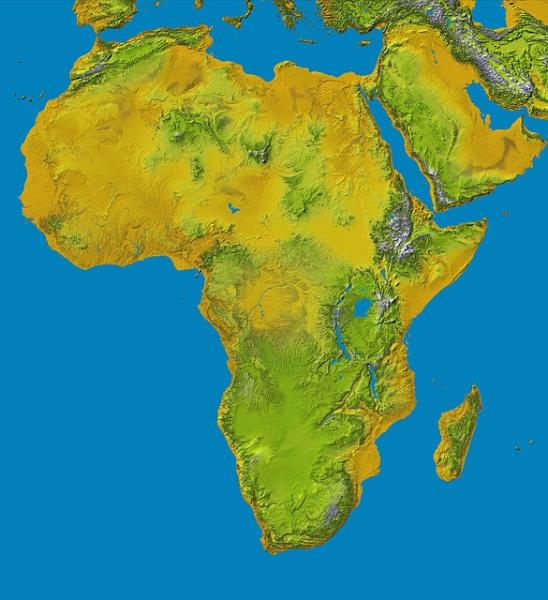
The United Nations recognizes 54 sovereign countries in Africa.
Alphabetical List of African Countries
- Algeria
- Angola
- Benin
- Botswana
- Burkina Faso
- Burundi
- Cabo Verde
- Cameroon
- Central African Republic
- Chad
- Comoros
- Congo
- Côte d’Ivoire
- Democratic Republic of the Congo
- Djibouti
- Egypt
- Equatorial Guinea
- Eritrea
- Eswatini
- Ethiopia
- Gabon
- Gambia (The)
- Ghana
- Guinea
- Guinea-Bissau
- Kenya
- Lesotho
- Liberia
- Libya
- Madagascar
- Malawi
- Mali
- Mauritania
- Mauritius
- Morocco
- Mozambique
- Namibia
- Niger
- Nigeria
- Rwanda
- Sao Tome and Principe
- Senegal
- Seychelles
- Sierra Leone
- Somalia
- South Africa
- South Sudan
- Sudan
- Togo
- Tunisia
- Uganda
- United Republic of Tanzania
- Zambia
- Zimbabwe
(Note: While Morocco is a member of the UN and listed above, the African Union actually counts 55 members because it recognizes the Sahrawi Arab Democratic Republic / Western Sahara, which the UN classifies as a non-self-governing territory.)
What is the safest country in Africa?
According to the Global Peace Index, Mauritius is consistently ranked as Africa’s safest and most peaceful country. It features low violent crime rates, stable democratic governance, and a strict rule of law.
Other top-ranking safe countries on the continent include:

- Botswana: Known for a stable political environment, strong democracy, and low crime rates.
- Namibia: Celebrated for low population density, political stability, and peaceful communities.
- The Gambia: Noted for low crime and a peaceful social climate.
- Ghana: Praised for a strong, stable democracy and welcoming environment for travellers
Our African Districts
- District 04 Malawi: African United Methodist, Life in Jesus Pentecostal Church, Prophet J Elisha Ministries, Divine Light Ministries
- District 05 Uganda: Greater Grace Ministries Evangelical church, Set free Church & Ministries, Happy Times Care Ministries, Touch Jesus Outreach Ministries
- District 07 Kenya: Province Our Lady of Africa, Christ Commission Fellowship Church, Glory Ministries, Bethel Orphanage Care Foundation, Grace Ministries Welfare Society, Builders For Christ Assembly Church, House of Light Church, Grace Outreach Church, Wilken of Builders for Christ Assembly Church
- District 10 RD Congo: Province Our Lady of Africa
- District 11 Nigeria:
- District 12 Zambia:
- District 30 South Africa:
- District 32 Mozambique: Divine Light Ministries
- District 33 Burundi: Jean NDAYIZIGA
- District 34 Liberia:
- District 35 Togo: Agape Family Fellowship, Espoir pour Afrique Togo 2018
- District 36 Ghana: Agape Family Fellowship
- District 37 Cameroon: Province Jesus the Good Shepherd
- OLD CAMP GROUND BIBLE INSTITUTE OF EASTERN AFRICA
INT Ministry Structure
Church Structure: Bishops oversee specific geographic areas called dioceses, and their role is central to the Catholic Church’s structure.
Population vs. Clergy: The number of priests needed depends on the Catholic population in a given area and the number of available clergy.
The distribution of priests is not uniform, leading to substantial differences in the ratio across continents: Europe and North America have higher priest-to-Catholic-population ratios. This results in a much lower priest-to-bishop ratio than on other continents.
Africa and South America, despite having significant Catholic populations, have far fewer priests, resulting in a much higher priest-to-bishop ratio.
The priest-to-bishop ratio varies, with a global average of about 76 priests per bishop.
CANADA: The Structure for Eric Michel Ministries International is the Archdiocese in the American Province of the Three Marys: Mary, the mother of Jesus; Mary Magdalene; and Mary Salome. We don’t have a church; we’re a ministry that covers the Canadian provinces of Ontario, Quebec, New Brunswick, Nova Scotia, Prince Edward Island, and Newfoundland.
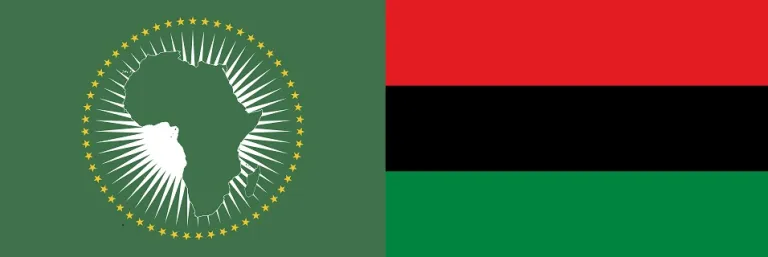
- AFRICA: Africa is divided into four provinces: Mid-Africa, East Africa, Southern Africa, and Our Lady of Africa, West Africa. In EMMI, a country is a district, and each district contains numerous local churches.
- Province of Mid-Africa includes the District of the Central African Republic, the District of the Democratic Republic of the Congo, the District of Gabon, the District of the Republic of Congo, the District of Tanzania and the District of Zambia. The conference will have five bishops. First Bishop: Sylvestre Moussounda, Mafuta Carnado, Seminarian and Lay Minister.
- Province of East Africa with the Districts of Burundi, Ethiopia, Kenya, Rwanda, South Sudan, and Uganda. The conference will have two bishops. First Bishop: Julius Ochungo, monsignor
- Province of St. Francis of Assisi, Southern Africa, with the Districts of Angola, Botswana, Malawi, Mozambique, Namibia, Swaziland, South Africa, and Zimbabwe. The conference ill have four bishops.
District Superintendents
Directly under the House of Bishops, a District Bishop oversees the district. The District Bishop is only administrative and organizational. They oversee all temporal activities and rule over our District Churches.
The Bishops are members of the House of Bishops and have the privilege of voting at all Local Synods, National Synods, the Synod-Symposium, and more. Our District Superintendents are also members of the permanent Synod organization and work every day as the Executive Council; their role is to serve as a committee responsible for running the organization.
These positions include the Bishop President, the Rev. Marie Y. Arnold. They create and review goals for the churches. Once the Synod-Symposium sets the plans, the permanent Synod ensures the churches follow the changes. They do this by meeting with bishops and ministers of all members of the Assembly of Churches and getting progress reports.
Duties
- Executives’ duties
- Supervise all members
- Oversee the finances, such as budgets
- legal services
- They may hire and train new staff
- Ordain newly appointed Bishops.
- They may direct staff on what tasks need to be done.
- Care for and direct investigations to resolve when complaints arise
- They develop relationships with people outside the organization.
- They meet regularly with other members.
- They work under the supervision of the Archbishop and the Synod-Symposium
Superintendent
Superintendent is the title given to a leader of a Christian denomination at the regional or national level.
Un surintendant (superintendentus en latin) est le titre donné à une personne dirigeant une confession chrétienne à l’échelle régionale ou nationale.
Who is a bishop supervisor of a district, which is a regional subdivision below an episcopal area of a Province?
Qui est l’évêque superviseur d’un district, qui est une subdivision régionale sous une zone épiscopale d’une province?.
The Metropolitan Abp. appoints the superintendent, who has authority over ten dioceses.
L’évêque métropolitain nomme le surintendant. Il exerce son autorité sur dix diocèses.
Bishop-prelate
A bishop who holds an office that does not require episcopal ordination, notably either the Prelate of a personal prelature or a territorial prelature.
A prelature (Latin: praelatura) is a Catholic ecclesiastical dignity conferred by the Metr. Abp that includes territorial jurisdiction (e.g., a bishopric, an abbey). The term derives from the Latin prælatus, the adjectival participle of præferre, meaning “to bring forward,” suggesting that the prelate is elevated in dignity above the rest of the clergy.
The archetypal prelate is the bishop, whose prelature is the diocese. All other types of prelates, including abbots regular and community superiors general, are derived from this original model and receive its insignia (such as the cross and mitre).
Un évêque qui occupe une fonction ne requérant pas d’ordination épiscopale, notamment celle de prélat d’une prélature personnelle ou territoriale.
Une prélature (en latin : praelatura) est une dignité ecclésiastique conférée par le métropolitain.Archevêque exerçant une juridiction territoriale (évêché, abbaye, etc.). Le terme est dérivé du latin prælatus, participe adjectif de præferre, qui signifie « mettre en avant », ce qui suggère que le prélat est élevé en dignité par rapport au reste du clergé.
L’archétype du prélat est l’évêque, dont la prélature est le diocèse. Tous les autres types de prélats, incluant les abbés réguliers et les supérieurs généraux de communauté, sont dérivés de ce modèle original, et en reçoivent les insignes (comme la crosse et la mitre).
Escalation:
- A parishioner needs to ask a question to the priest.
- The priest does not know the answer, so he will ask the bishop.
- The bishop does not know the answer; the bishop will ask the superintendent.
- The superintendent does not know the answer; the superintendent will ask the Metropolitan Archbishop.
The same routine applies to requesting permission to perform an action that is not authorized in the Book of Common Prayer or in any administrative rules
Escalade :
- Un paroissien doit poser une question au prêtre.
- Le prêtre ne connaît pas la réponse et s’adresse à l’évêque.
- L’évêque ne connaît pas la réponse et s’adressera au surintendant.
- Le surintendant ne connaît pas la réponse et s’adressera à l’archevêque métropolitain.
La même procédure s’applique à la demande de permission d’effectuer une action non autorisée dans le Livre de prière commune ou dans les règles administratives.
House of Bishops
- 1. Bishop Marie Arnold, President of the House of Bishops
- 2. Bishop Julius O. Nyambuoro, Superintendent of District 07, Kenya
- 3. Bishop Xaviour S. Chikwatu, Superintendent of District 04, Malawi
- 4. Bishop Samuel Mark Oloo
- 5. Bishop Dr. M.M. Waqas
- 6. Bishop Dr. Stephen Kwabla Gbeve
District Synods
Each district must hold an annual regional convocation of its members. The District Superintendent attends the meeting. The business is completed and voted on by the voting members at that regional level. The report is given to the Permanent Synod.
Ordination certificates are given to any member who is recommended by the local church and approved by the District Superintendent Bishop, has completed the educational requirements at Footsteps of Jesus Seminary and, after prayerful consideration, has enjoyed full admission into the faith, with all powers to vote and carry on the business of the church within God’s calling. This certification is for life. Ministers need other documents to work with us. First, the good-standing certificate for ministers, with a yearly renewal